
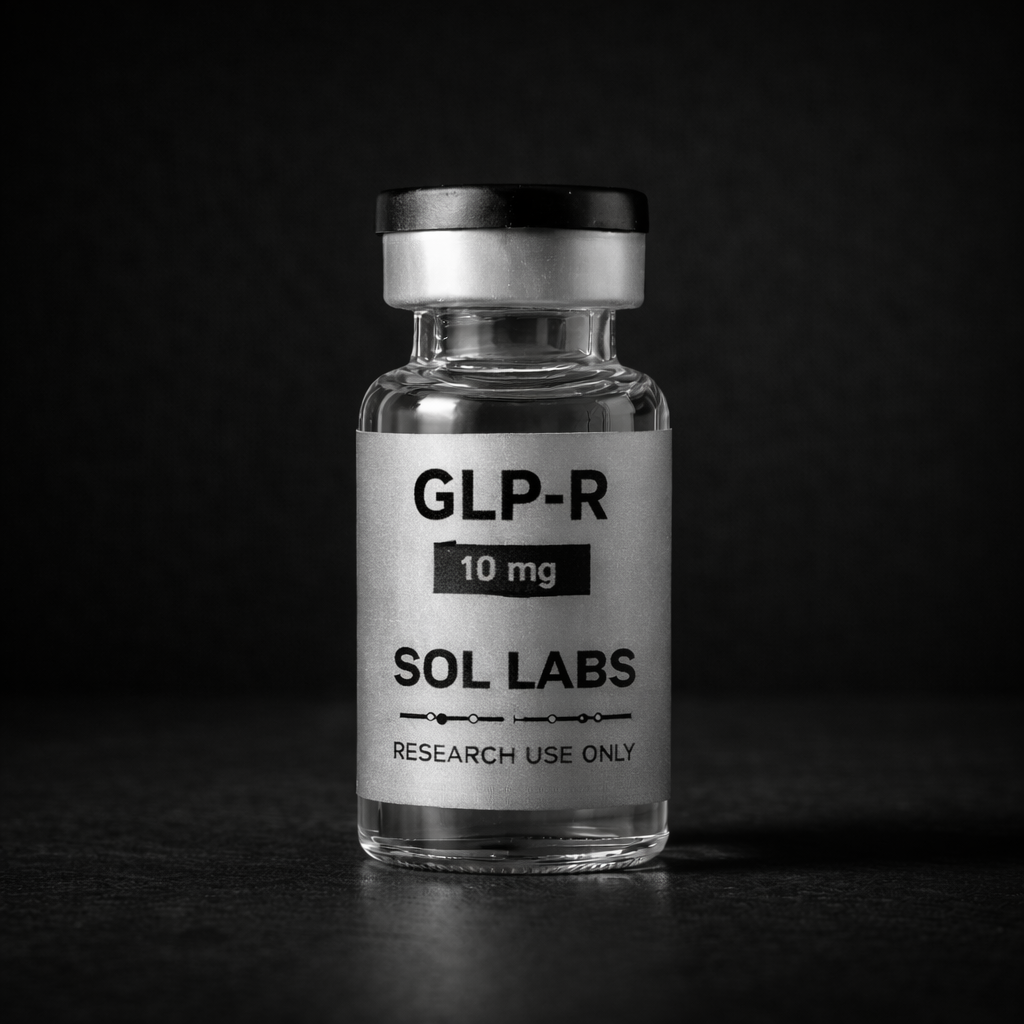
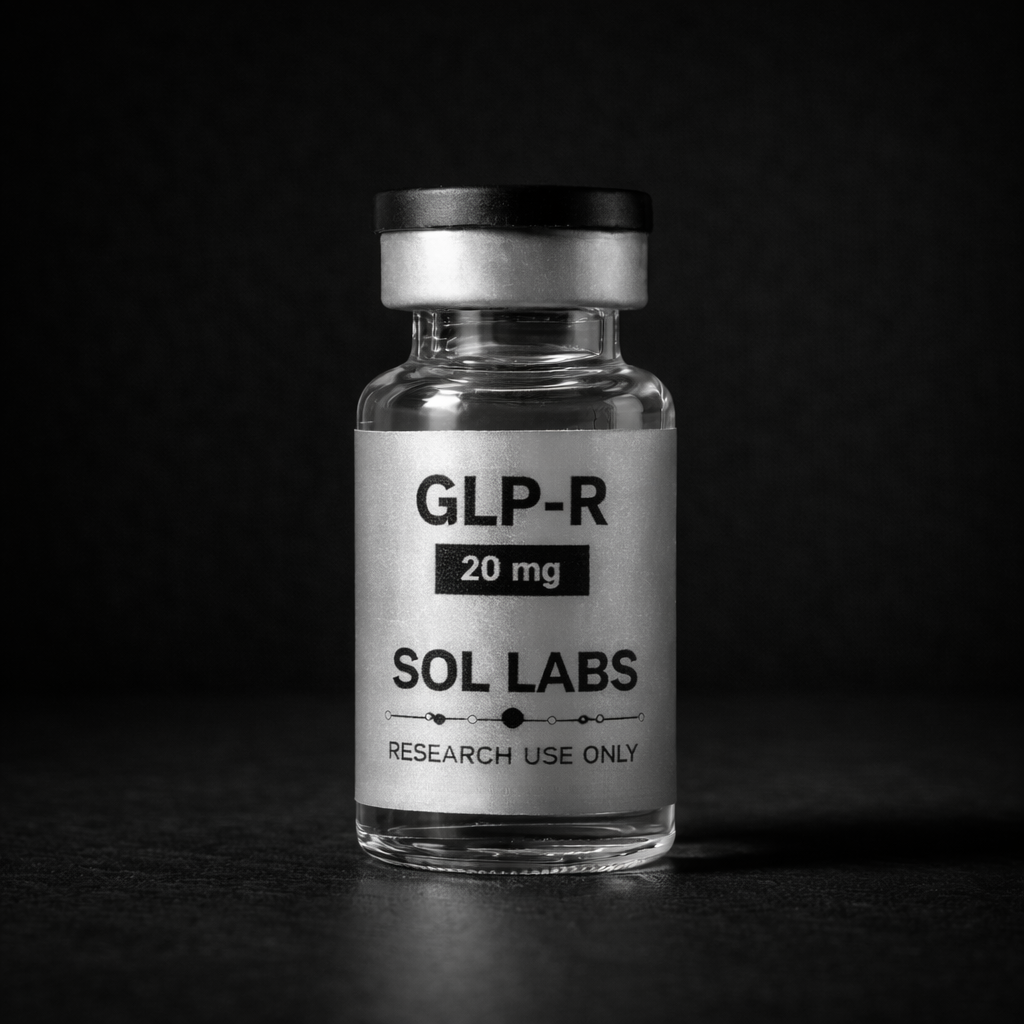
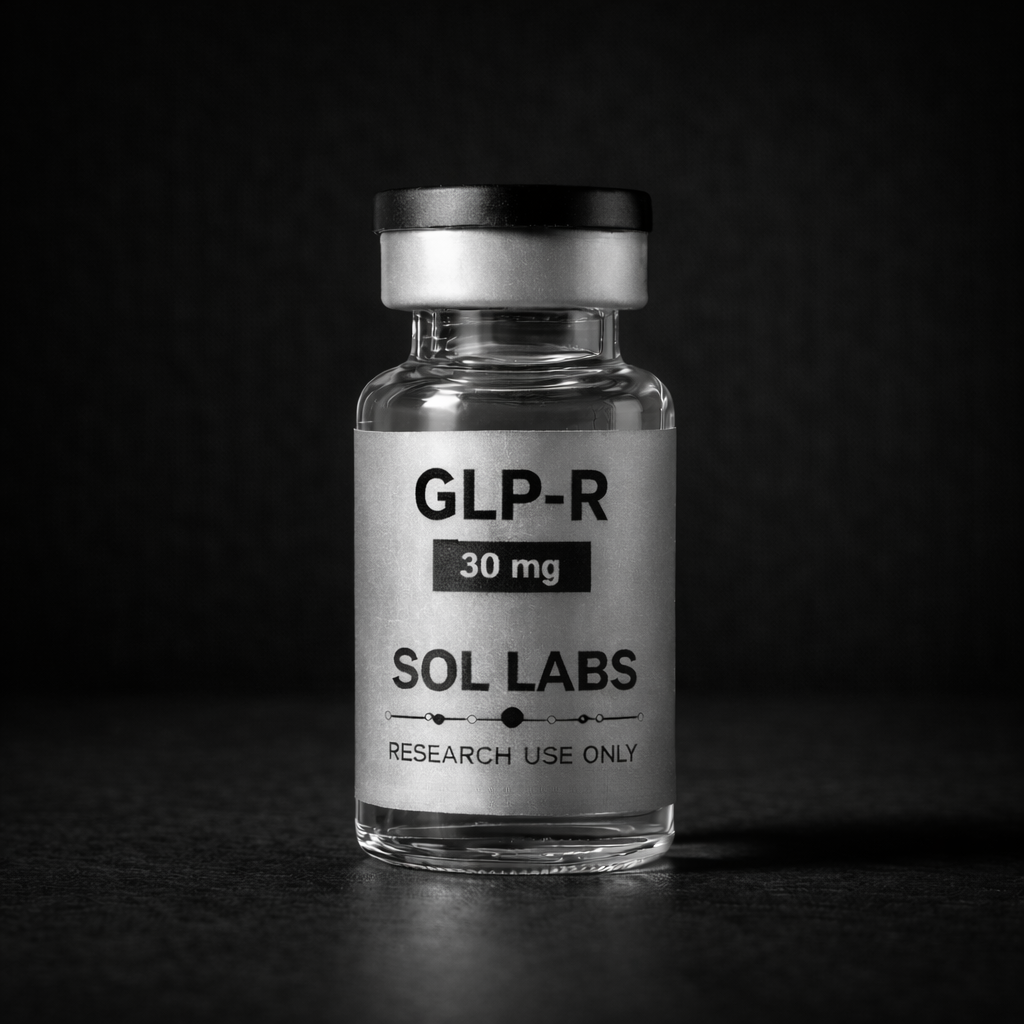
Description
GLP-R (also known as Retatrutide) is a synthetic 39-amino acid peptide that represents a significant breakthrough in metabolic research as a “triple agonist.” It is engineered to target and activate three distinct nutrient-stimulated hormone receptors: the GLP-1 (glucagon-like peptide-1), GIP (glucose-dependent insulinotropic polypeptide), and GCGR (glucagon) receptors. This multi-pathway approach is researched for its potential to provide superior metabolic regulation compared to single or dual agonists.
-
Purity: >99% (HPLC Tested)
-
Format: Lyophilized White Powder
-
Molecular Formula: C221H342N46O71
-
Research Target: Triple-Pathway Metabolic Synergy (GLP-1/GIP/GCG)
GLP-R (specifically the LY3437943 research molecule) builds upon the success of dual agonists by adding glucagon receptor (GCGR) agonism. In research models, the addition of glucagon agonism is investigated for its ability to increase energy expenditure and directly target hepatic fat metabolism, while the GIP and GLP-1 components focus on insulin secretion, gastric emptying, and appetite suppression. This triple-receptor engagement is currently a focal point for studies involving obesity, Type 2 Diabetes, and metabolic-associated steatotic liver disease (MASLD).
Research Observed Outcomes
Data derived from the Phase 2 clinical research programs highlight the following physiological impacts in controlled test models:
-
24.2% Weight Reduction: In a 48-week Phase 2 study, the highest research dose resulted in an average body weight reduction of 24.2%, the highest observed in this timeframe for incretin-based research.
-
100% “Responders”: Research data showed that 100% of subjects in the high-dose groups achieved at least a 5% reduction in total body weight.
-
HbA1c Normalization: In Type 2 Diabetes models, Retatrutide showed a significant reduction in HbA1c, with many subjects reaching a “normal” glucose range of <5.7%.
-
80%+ Liver Fat Reduction: Exploratory research on MASLD/NAFLD models demonstrated a mean relative reduction in liver fat of over 80%, with many subjects achieving complete clearance of hepatic steatosis.
-
Blood Pressure & Lipid Improvements: Significant mean reductions were observed in systolic/diastolic blood pressure and fasting triglycerides (down ~40%).
Key Linked Studies & Research References
-
Phase 2 Efficacy (Obesity): Jastreboff AM, et al. (2023). “Triple–Hormone-Receptor Agonist Retatrutide for Obesity — A Phase 2 Trial.” New England Journal of Medicine (NEJM). Established the 24.2% weight loss benchmark.
-
T2D & Glycemic Control: Rosenstock J, et al. (2023). “Retatrutide, a GIP, GLP-1, and glucagon receptor agonist, for people with type 2 diabetes: a randomised, double-blind, placebo and active-controlled, parallel-group, phase 2 trial.” The Lancet.
-
Hepatic Fat Research: Sanyal AJ, et al. (2023). “Retatrutide’s effect on liver fat content in participants with metabolic dysfunction-associated steatotic liver disease.” AASLD Liver Meeting.
-
Mechanism of Action: Coskun T, et al. (2022). “LY3437943, a novel triple GIP, GLP-1, and glucagon receptor agonist.” Cell Metabolism.
Storage & Stability Protocols
To maintain peptide integrity and prevent degradation, the following storage guidelines are recommended:
-
Lyophilized Powder: Store at -20°C for long-term stability. Stable at room temperature for short-term transit and shipping.
-
Reconstituted Stability (Bacteriostatic Water): Once reconstituted, the solution typically maintains stability for 4–6 weeks when refrigerated (2°C – 8°C).
-
Reconstituted Stability (Sterile Water): Stability is significantly shorter, typically 7–12 days, due to the absence of antimicrobial preservatives.
-
Handling: Avoid excessive agitation; swirling is preferred over vigorous shaking to prevent peptide denaturation.
⚠️ STRICT COMPLIANCE NOTICE: FOR LABORATORY RESEARCH ONLY This product is a chemical substance intended strictly for in vitro or laboratory experimentation. Any form of ingestion, injection, or topical application to humans or animals is STRICTLY PROHIBITED. This product is not a drug, food, or cosmetic and has not been approved by the FDA for any medical application. Handling should only be performed by qualified professionals in a controlled environment.
Reviews
There are no reviews yet.