
Description
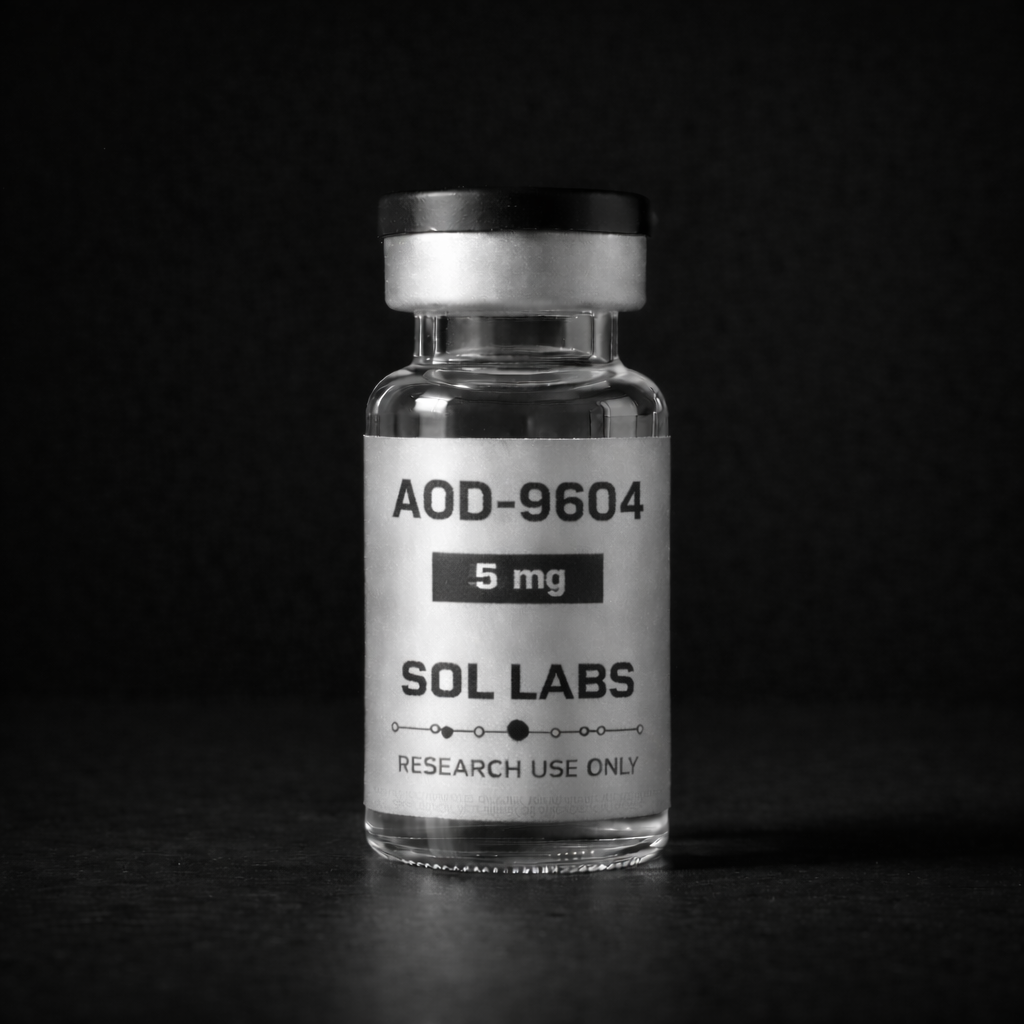
AOD 9604 (Advanced Obesity Drug) is a synthetic 16-amino acid peptide fragment derived from the C-terminal domain of human growth hormone (hGH). Specifically encompassing residues 176–191 with an added tyrosine, this compound is engineered to isolate the lipolytic (fat-burning) properties of growth hormone without inducing the systemic growth effects or insulin resistance associated with full-length HGH.
-
Purity: >99% (HPLC Tested)
-
Format: Lyophilized White Powder
-
Molecular Formula: C78H123N23O23S2
-
Research Target: Adipose Tissue Metabolism & Lipolysis
AOD 9604 represents a targeted approach to metabolic research. Unlike full-length HGH, research indicates that AOD 9604 does not stimulate the production of IGF-1 or negatively impact blood glucose levels. Its primary mechanism of action involves the upregulation of beta-3-adrenergic receptors in adipose tissue, which facilitates the breakdown of stored fats and inhibits the formation of new fat cells (lipogenesis).
Research Observed Outcomes Data from metabolic studies and clinical programs highlight the following physiological impacts in test models:
-
Adipose Tissue Reduction: Studies in obese murine models showed a reduction in adipose tissue accumulation by more than 50% over 14–20 days of chronic administration.
-
Enhanced Lipolysis: Research indicates the peptide can increase glycerol release by approximately 23% in isolated adipocytes.
-
Fat Oxidation Increase: Preclinical experiments observed a significant rise in fat oxidation.
-
Preservation of Glucose Tolerance: AOD 9604 has demonstrated no significant adverse effect on insulin sensitivity across human clinical trials involving over 900 subjects.
Key Linked Studies & Research References
-
Safety & Tolerability (Human): Stier H, et al. (2013). “Safety and Tolerability of the Hexadecapeptide AOD9604 in Humans.” Journal of Endocrinology and Metabolism.
-
Lipid Metabolism (Animal): Heffernan M, et al. (2001). “The effects of human GH and its lipolytic fragment (AOD9604) on lipid metabolism in obese mice.” Endocrinology.
-
Metabolic Studies: Ng FM, et al. (2000). “Metabolic studies of a synthetic lipolytic domain (AOD9604) of human growth hormone.” Hormone Research.
Storage & Stability Protocols
-
Lyophilized Powder: Store at -20°C for long-term stability. Stable at room temperature for short-term transit.
-
Reconstituted Stability (Bacteriostatic Water): Once reconstituted, stability is maintained for 4–6 weeks when refrigerated (2°C – 8°C).
-
Reconstituted Stability (Sterile Water): Stability is shorter, typically 7–12 days.
-
Handling: Research personnel should follow manufacturer guidelines and avoid repeated freeze-thaw cycles.
⚠️ STRICT COMPLIANCE NOTICE: FOR LABORATORY RESEARCH ONLY This product is a chemical substance intended strictly for in vitro or laboratory experimentation. Any form of ingestion, injection, or topical application to humans or animals is STRICTLY PROHIBITED. This product is not a drug, food, or cosmetic and has not been approved by the FDA for any medical application. Handling should only be performed by qualified professionals.
Reviews
There are no reviews yet.