
Description
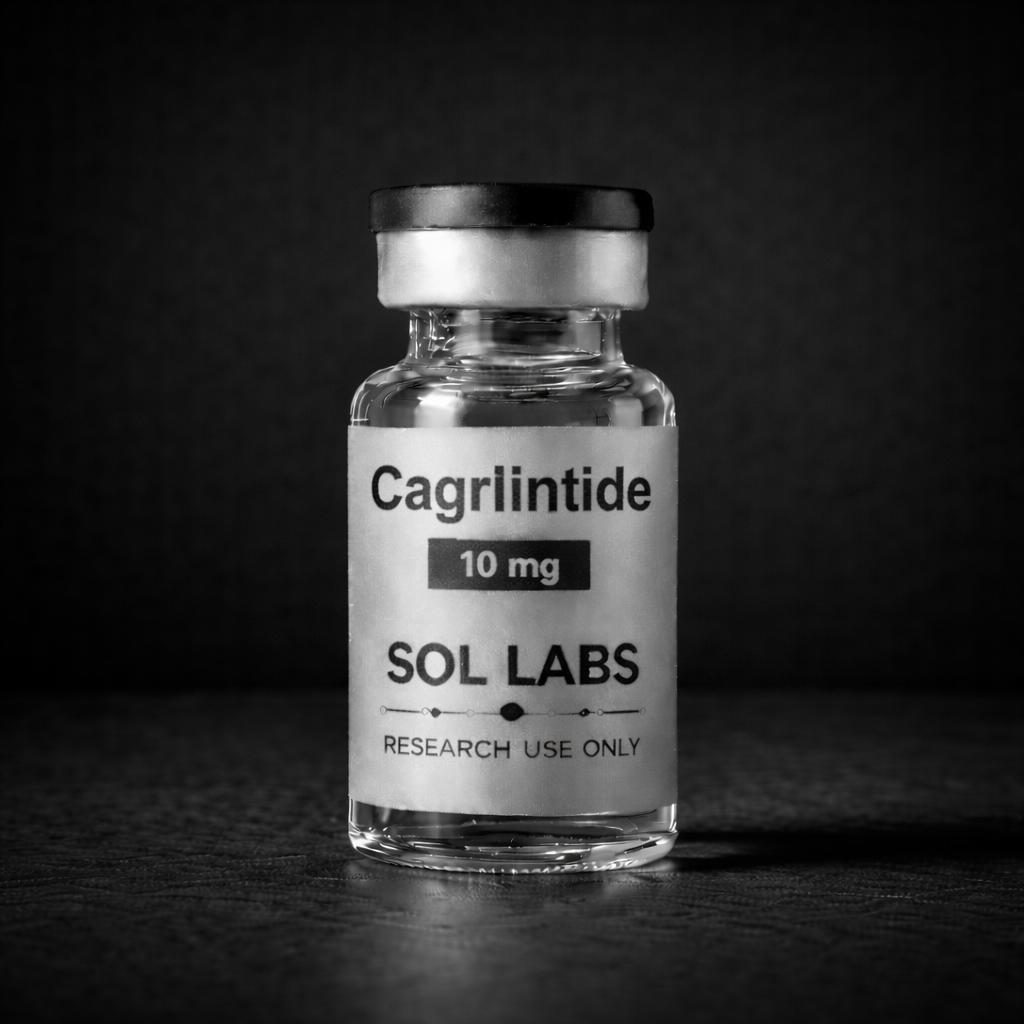
Cagrilintide – 10mg
Cagrilintide is a long-acting synthetic analog of amylin, a peptide hormone co-secreted with insulin by pancreatic beta cells. It is engineered for laboratory investigation into amylin receptor signaling, appetite regulation pathways, and metabolic homeostasis research.
This compound is studied strictly in controlled laboratory environments for its interaction with calcitonin receptor complexes and its role in energy balance and glucose regulation pathways.
Purity: >99% (HPLC Tested)
Format: Lyophilized White Powder
Molecular Formula: (Long-acting acylated amylin analog; proprietary modification)
Research Target: Amylin Receptor (CTR/RAMP Complex) & Energy Regulation
Cagrilintide binds to amylin receptors, which are heterodimeric complexes of the calcitonin receptor with receptor activity-modifying proteins (RAMPs). In experimental models, amylin receptor activation influences satiety signaling, gastric emptying dynamics, and central appetite regulation pathways.
Research Observed Outcomes
Data from metabolic and endocrine research programs highlight the following findings in controlled laboratory models:
Appetite Signaling Modulation:
Amylin receptor activation has been associated with reduced food intake markers in preclinical models.
Delayed Gastric Emptying Research:
Laboratory investigations indicate modulation of gastric motility pathways, contributing to nutrient absorption regulation studies.
Glucose Regulation Studies:
Research suggests influence on postprandial glucose control in metabolic stress models.
Energy Balance Pathway Activation:
Cagrilintide has demonstrated interaction with hypothalamic signaling circuits involved in metabolic regulation.
Synergistic Research with GLP-1 Pathways:
Preclinical investigations explore combined amylin and GLP-1 receptor activation effects in metabolic studies.
Key Linked Studies & Research References
Amylin Receptor Biology:
Hay, D.L., et al. (2015). “Amylin receptors: molecular composition and pharmacology.” Pharmacological Reviews.
Metabolic Regulation Research:
Roth, J.D., et al. (2008). “Amylin receptor agonism and metabolic outcomes.” Diabetes, Obesity & Metabolism.
Central Appetite Signaling:
Lutz, T.A. (2010). “The role of amylin in energy homeostasis.” American Journal of Physiology.
Combination Pathway Studies:
Frias, J.P., et al. (2021). “Amylin and GLP-1 receptor co-agonism research.” Lancet-related metabolic research.
Storage & Stability Protocols
To preserve compound integrity and receptor-binding stability:
Lyophilized Powder:
Store at -20°C for long-term stability. Stable at room temperature for short-term transit.
Reconstituted Stability (Bacteriostatic Water):
When reconstituted under sterile laboratory conditions, solution stability is typically maintained for 4–6 weeks under refrigeration (2°C – 8°C).
Reconstituted Stability (Sterile Water):
Stability is significantly shorter, typically 7–12 days due to absence of antimicrobial preservatives.
Handling:
Avoid repeated freeze-thaw cycles. Protect from excessive heat, light, and agitation during reconstitution.
⚠️ STRICT COMPLIANCE NOTICE: FOR LABORATORY RESEARCH ONLY
This product is a chemical research compound intended strictly for in vitro or laboratory experimentation. Any form of ingestion, injection, or topical application to humans or animals is STRICTLY PROHIBITED. This product is not a drug, food, or cosmetic and has not been approved by the FDA for any medical application. Handling must be performed by qualified professionals in controlled laboratory environments.
Reviews
There are no reviews yet.