
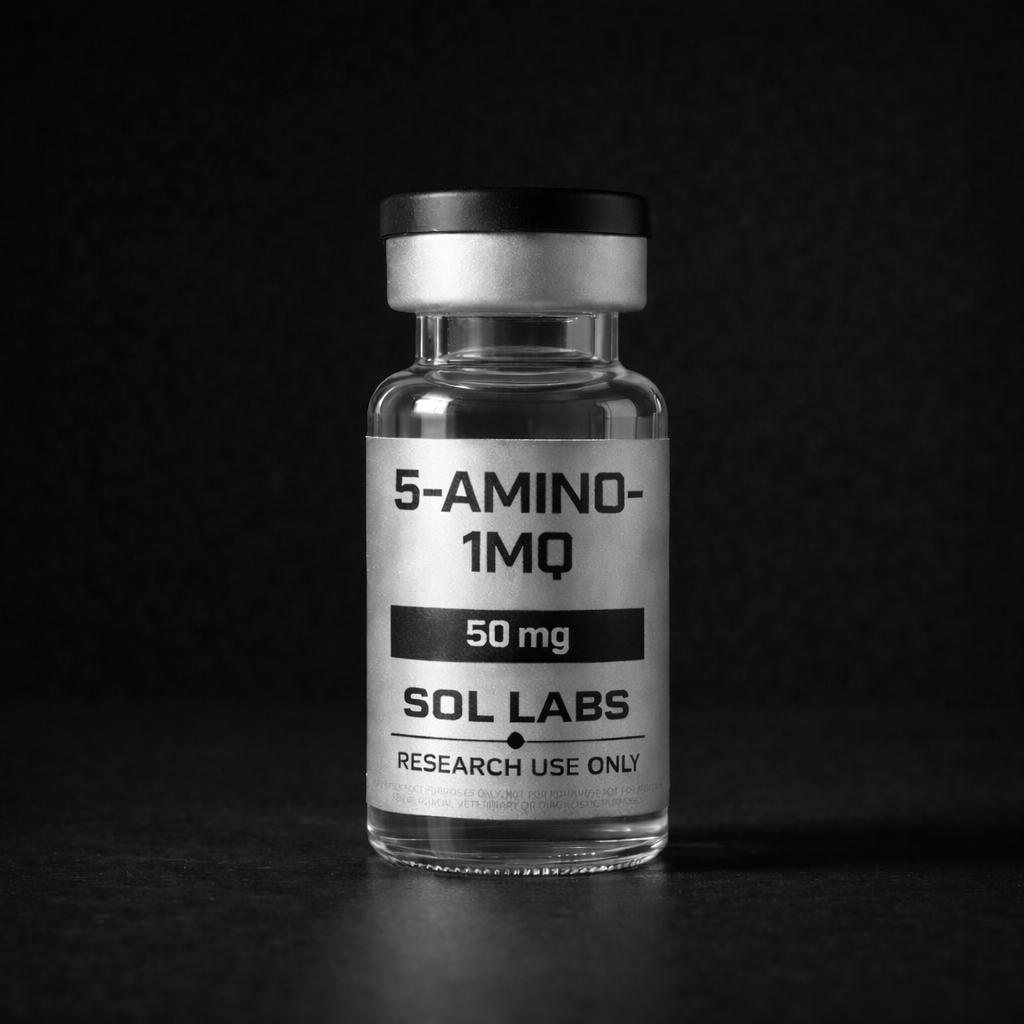
Description
5-Amino-1MQ is a small-molecule research compound studied for its role as a selective inhibitor of Nicotinamide N-methyltransferase (NNMT). NNMT is an enzyme involved in cellular energy regulation, NAD+ metabolism, and methylation balance. This compound is engineered exclusively for laboratory investigation into metabolic efficiency, adipocyte biology, and cellular bioenergetics.
Purity: >99% (HPLC Tested)
Format: Lyophilized White Powder
Molecular Formula: C10H11N2+ (Quinolinium derivative)
Research Target: NNMT Inhibition & Cellular Energy Regulation
5-Amino-1MQ represents a targeted research approach to metabolic modulation. NNMT overexpression has been associated in research models with obesity, insulin resistance, and impaired metabolic flexibility. By selectively inhibiting NNMT activity, 5-Amino-1MQ is studied for its ability to alter cellular NAD+ availability and influence energy expenditure pathways at the molecular level.
Research Observed Outcomes
Data from metabolic and cellular research programs highlight the following effects in controlled laboratory models:
Reduced Adiposity in Research Models:
In diet-induced metabolic stress studies, NNMT inhibition via 5-Amino-1MQ was associated with decreased fat mass accumulation without significant loss of lean tissue in rodent models.
Improved Metabolic Efficiency:
Research suggests that NNMT inhibition may increase cellular energy utilization by altering nicotinamide and methyl donor flux, potentially enhancing metabolic turnover.
Enhanced Lipolytic Signaling:
Laboratory investigations observed increased expression of genes involved in fatty acid oxidation and reduced lipogenic signaling in adipose tissue models.
NAD+ Pathway Modulation:
NNMT inhibition may influence NAD+ salvage pathways, which are central to mitochondrial function, sirtuin activity, and cellular longevity research.
Insulin Sensitivity Research:
Preclinical models suggest improved glucose tolerance and insulin responsiveness in metabolically stressed test systems.
Key Linked Studies & Research References
NNMT & Obesity Mechanism:
Kraus, D., et al. (2014). “Nicotinamide N-methyltransferase knockdown protects against diet-induced obesity.” Nature.
Metabolic Regulation Review:
Kannt, A., & Rajagopal, S. (2017). “Nicotinamide N-methyltransferase: A novel metabolic regulator.” Trends in Endocrinology & Metabolism.
Energy Expenditure & Adipose Biology:
Hong, S., et al. (2015). “NNMT inhibition increases cellular energy expenditure in adipocytes.” Biochemical Journal.
NAD+ & Methylation Pathways:
Riederer, M., et al. (2009). “NNMT and its role in metabolic regulation.” Journal of Biological Chemistry.
Storage & Stability Protocols
To maintain compound integrity, follow these guidelines:
Lyophilized Powder:
Store at -20°C for long-term stability. Dry powder remains stable at room temperature for short-term transit.
Reconstituted Stability (Bacteriostatic Water):
When reconstituted under sterile laboratory conditions, solution stability is typically maintained for 4–6 weeks under refrigeration (2°C – 8°C).
Reconstituted Stability (Sterile Water):
Stability is significantly shorter, typically 7–14 days, due to absence of antimicrobial preservatives.
Handling:
Minimize exposure to light, heat, and repeated freeze-thaw cycles. Avoid vigorous agitation during reconstitution.
⚠️ STRICT COMPLIANCE NOTICE: FOR LABORATORY RESEARCH ONLY
This product is a chemical research compound intended strictly for in vitro or laboratory experimentation. Any form of ingestion, injection, or topical application to humans or animals is STRICTLY PROHIBITED. This product is not a drug, food, or cosmetic and has not been approved by the FDA for any medical application. Handling must be performed by qualified professionals in controlled laboratory environments.


Reviews
There are no reviews yet.